Cambridge International · IGCSE · English Literature
Blues for an Alabama Sky
Pearl Cleage's 'Blues for an Alabama Sky' is a compelling, emotionally rich exploration of the fading Harlem Renaissance. It offers students an incredible opportunity to analyse complex intersections of race, gender, sexuality, and economic hardship through deeply drawn characters and sharp dramatic craft.
- 7 min read
- 2 worked examples
- 4 practice questions
- 8 key terms
Study Notes

Overview
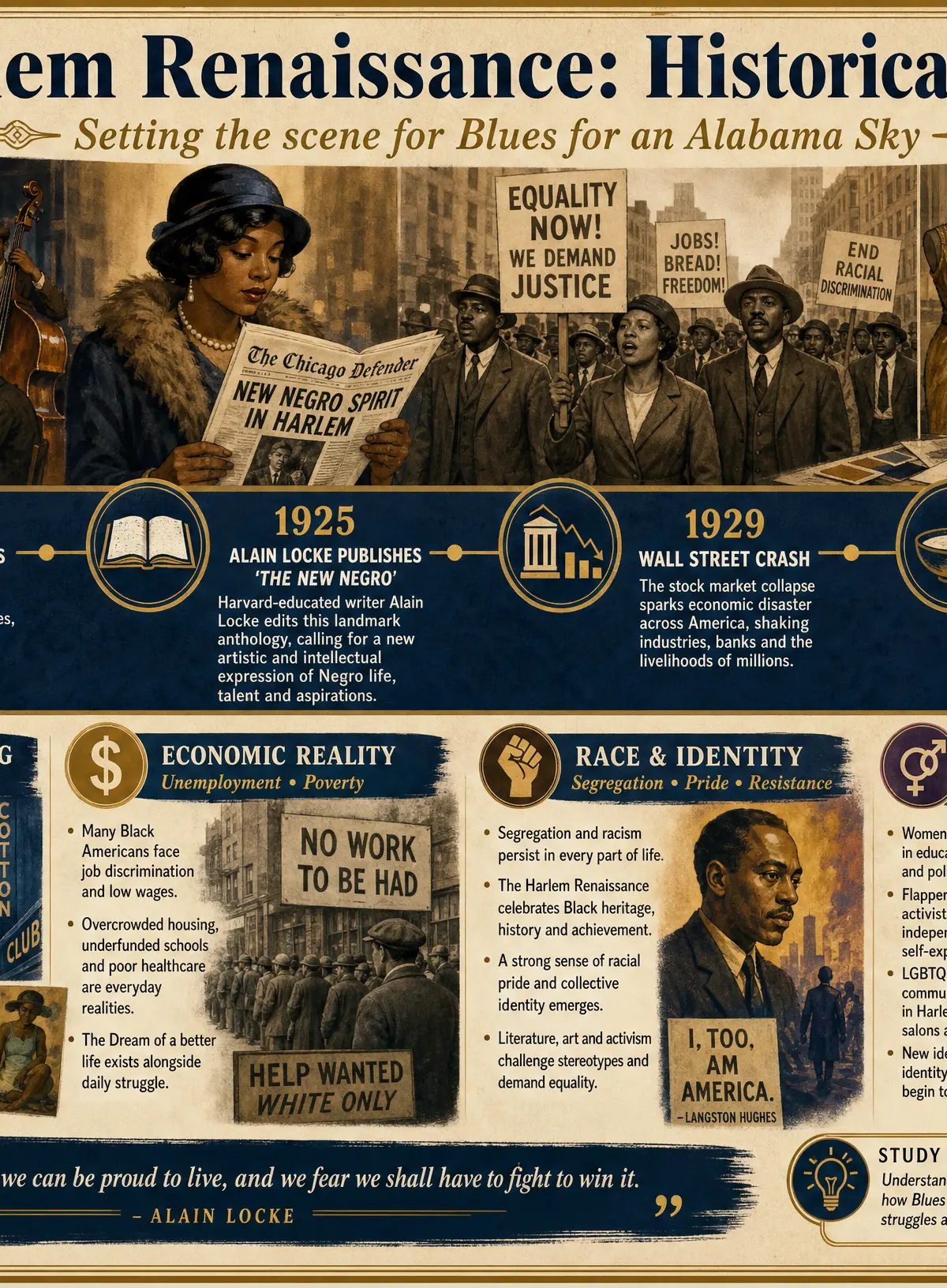
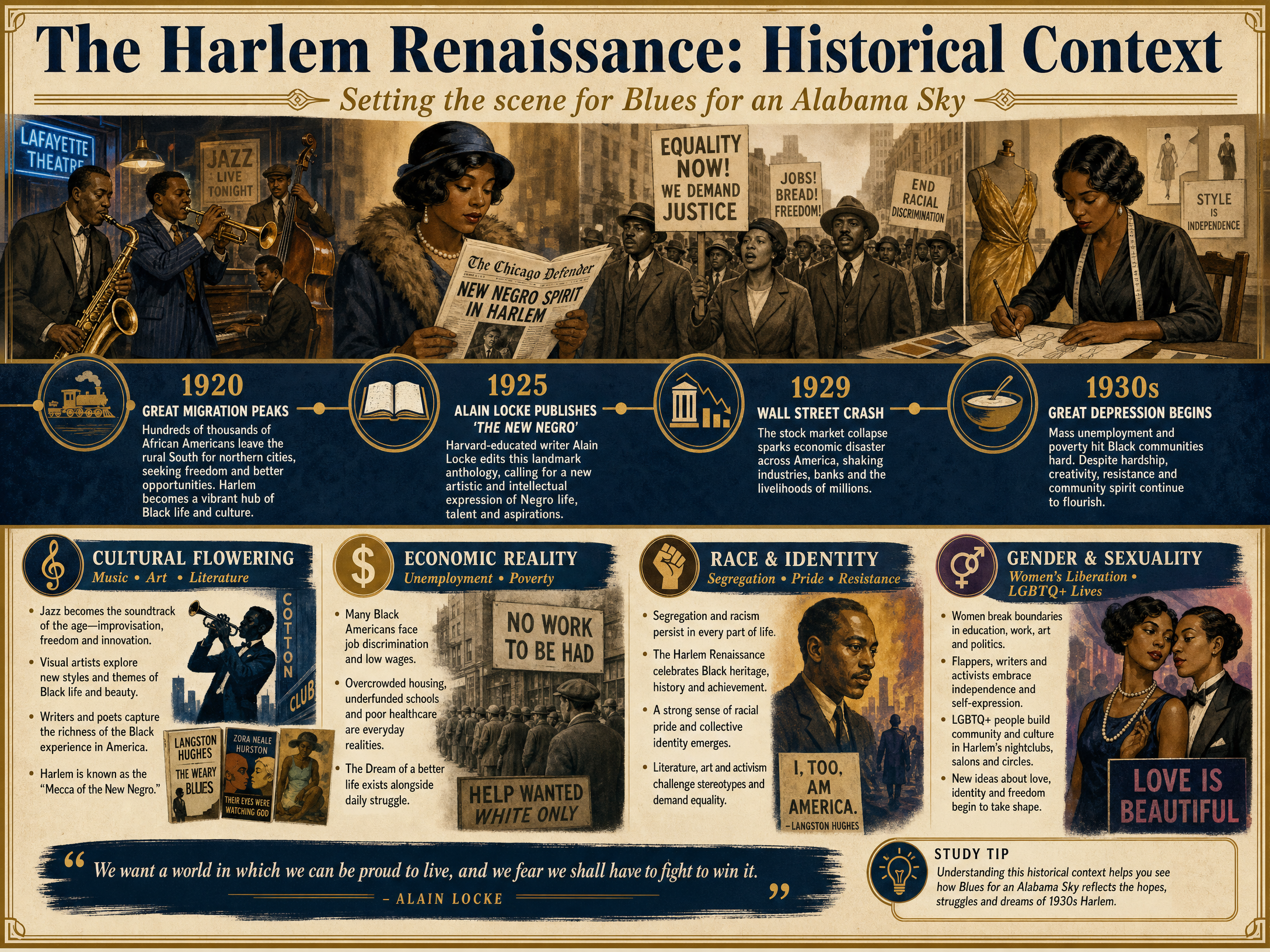
Set in Harlem during the summer of 1930, Pearl Cleage's Blues for an Alabama Sky captures a pivotal historical moment: the vibrant cultural flowering of the Harlem Renaissance colliding with the devastating economic reality of the Great Depression. The play focuses on a close-knit group of friends whose dreams and survival strategies are tested by poverty, societal prejudice, and the arrival of a conservative stranger from the Deep South. For Cambridge IGCSE, examiners reward candidates who can perceptively analyse how Cleage uses dramatic techniques to explore the intersection of race, gender, sexuality, and class. You must move beyond plot summary to evaluate how Cleage crafts meaning and why she places these specific characters in this specific historical crucible.
Plot/Content Overview
The play unfolds over a sweltering summer in a Harlem apartment building.
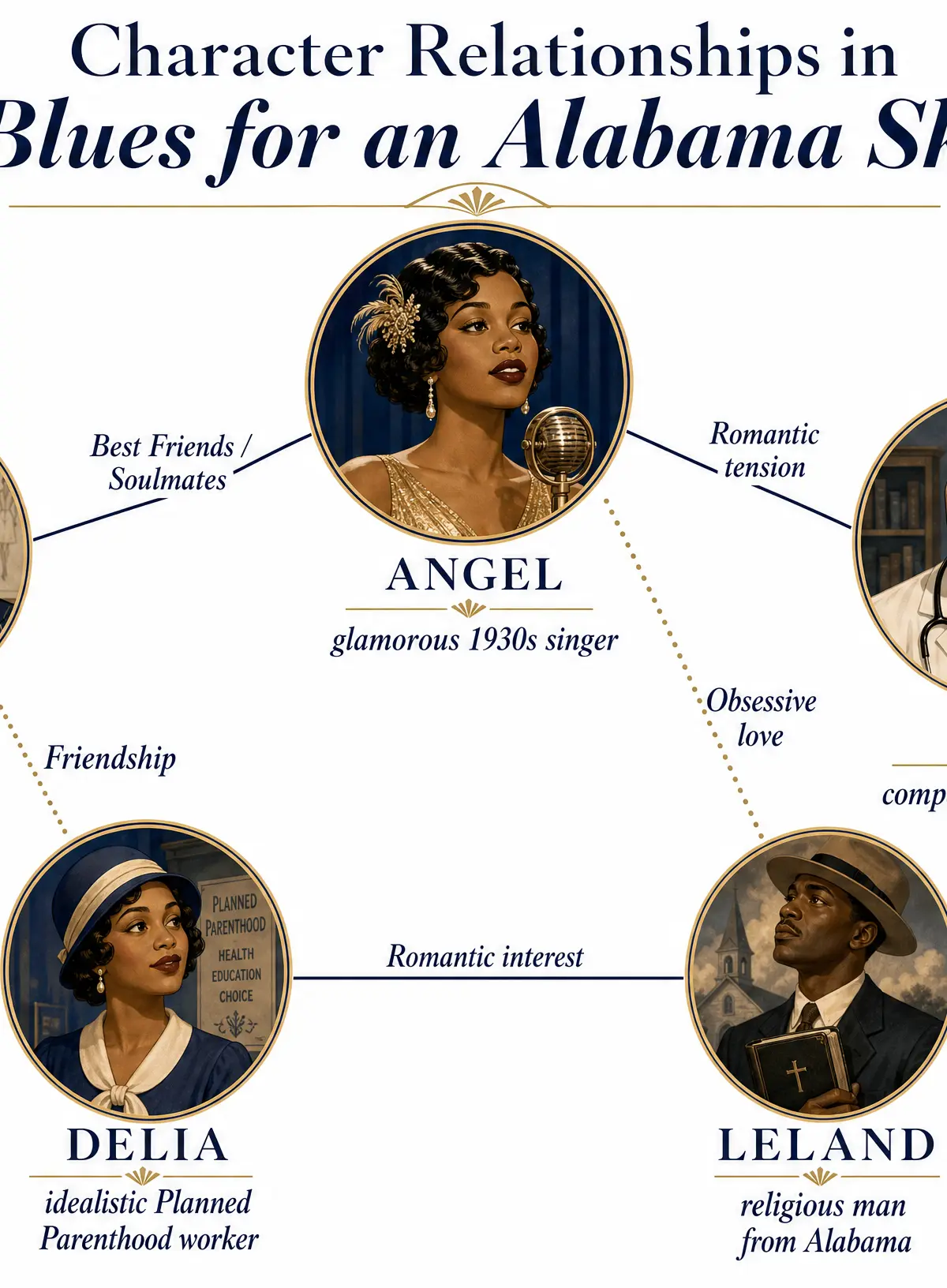
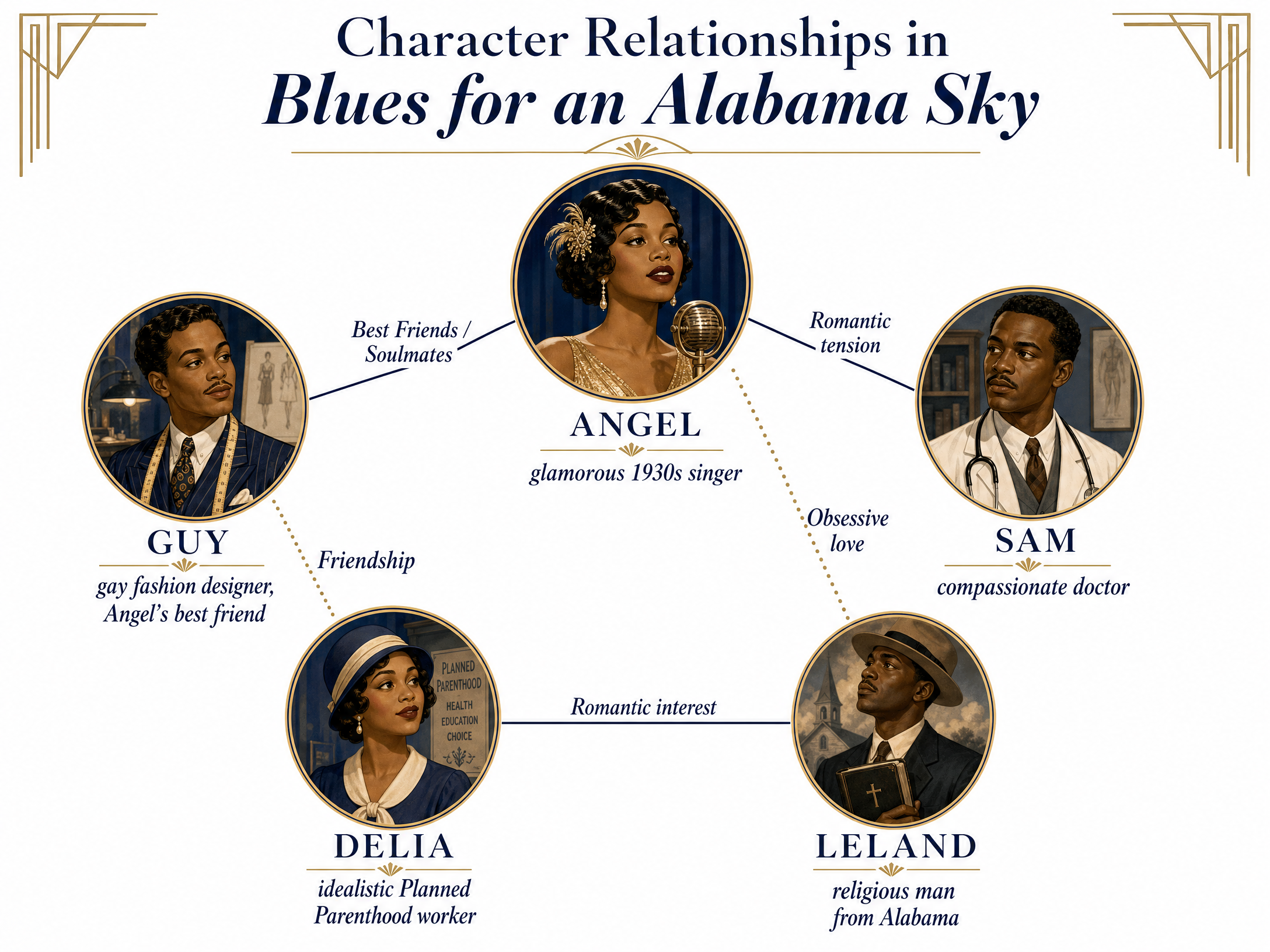
Act 1: Angel Allen, a glamorous but vulnerable nightclub singer, has been fired and dumped by her gangster lover. She moves in with her best friend, Guy Jacobs, a gay costume designer dreaming of Paris. We meet their neighbour, Delia Patterson, an idealistic Planned Parenthood worker, and Sam Thomas, a hardworking local doctor. The catalyst for the tragedy arrives in the form of Leland Cunningham, a grieving, deeply religious man from Alabama who becomes obsessively infatuated with Angel.
Act 2: Tensions escalate as economic desperation sets in. Guy continues to wait for a ticket to Paris from Josephine Baker, while Angel, terrified of poverty, agrees to marry Leland despite fundamentally disagreeing with his conservative, patriarchal values. Delia and Sam's romance blossoms, representing a progressive, community-focused future.
Climax and Resolution: The ideological clash between Leland's rigid morality and the Harlem community's progressive values turns violent. When Angel decides to get an abortion (facilitated by Sam and Delia) and leave Leland, his reaction is catastrophic, leading to a tragic conclusion that shatters the community but sees Guy finally secure his passage to Paris.
Themes
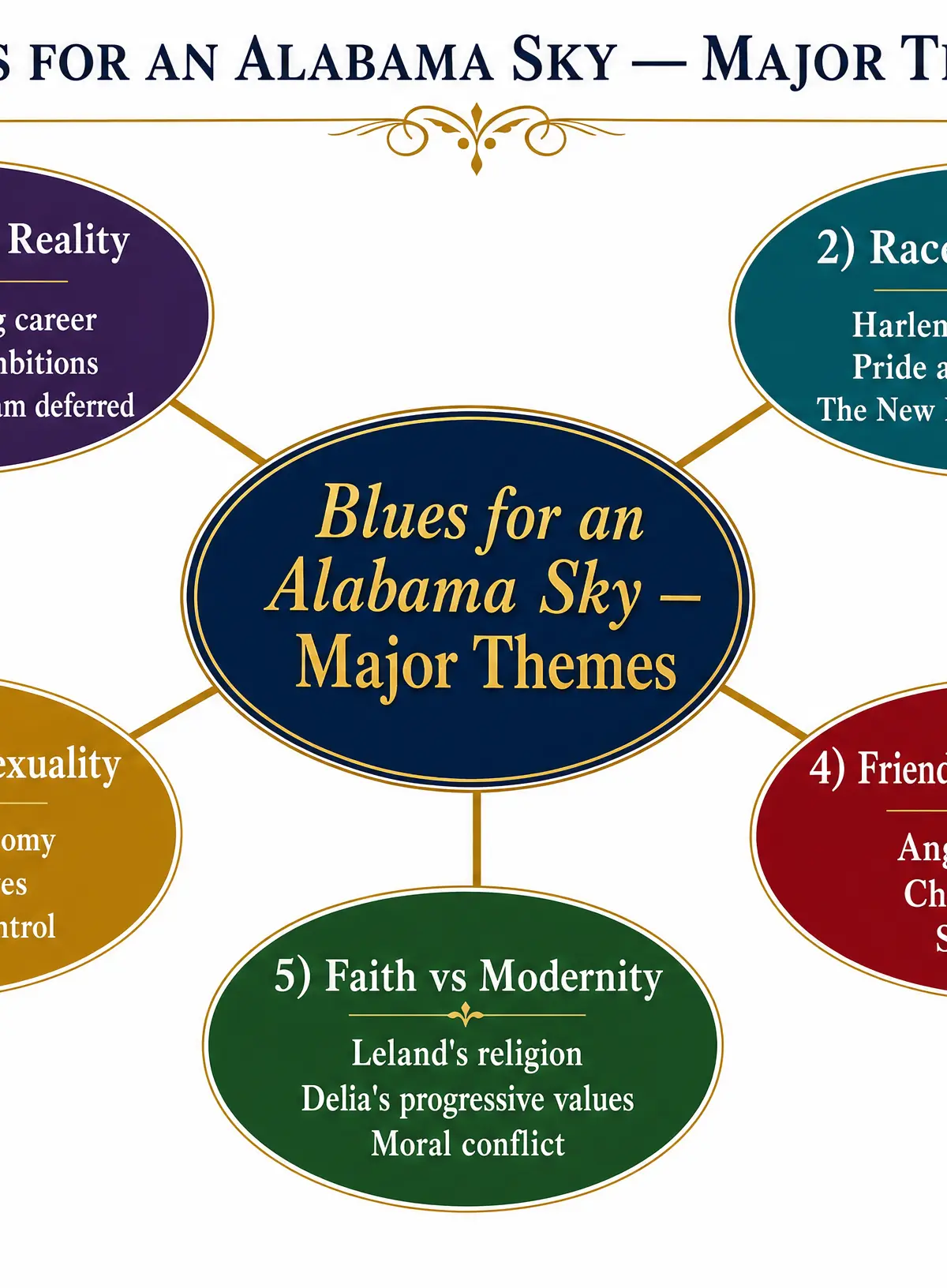
Theme 1: Dreams vs. Reality (The American Dream Deferred)
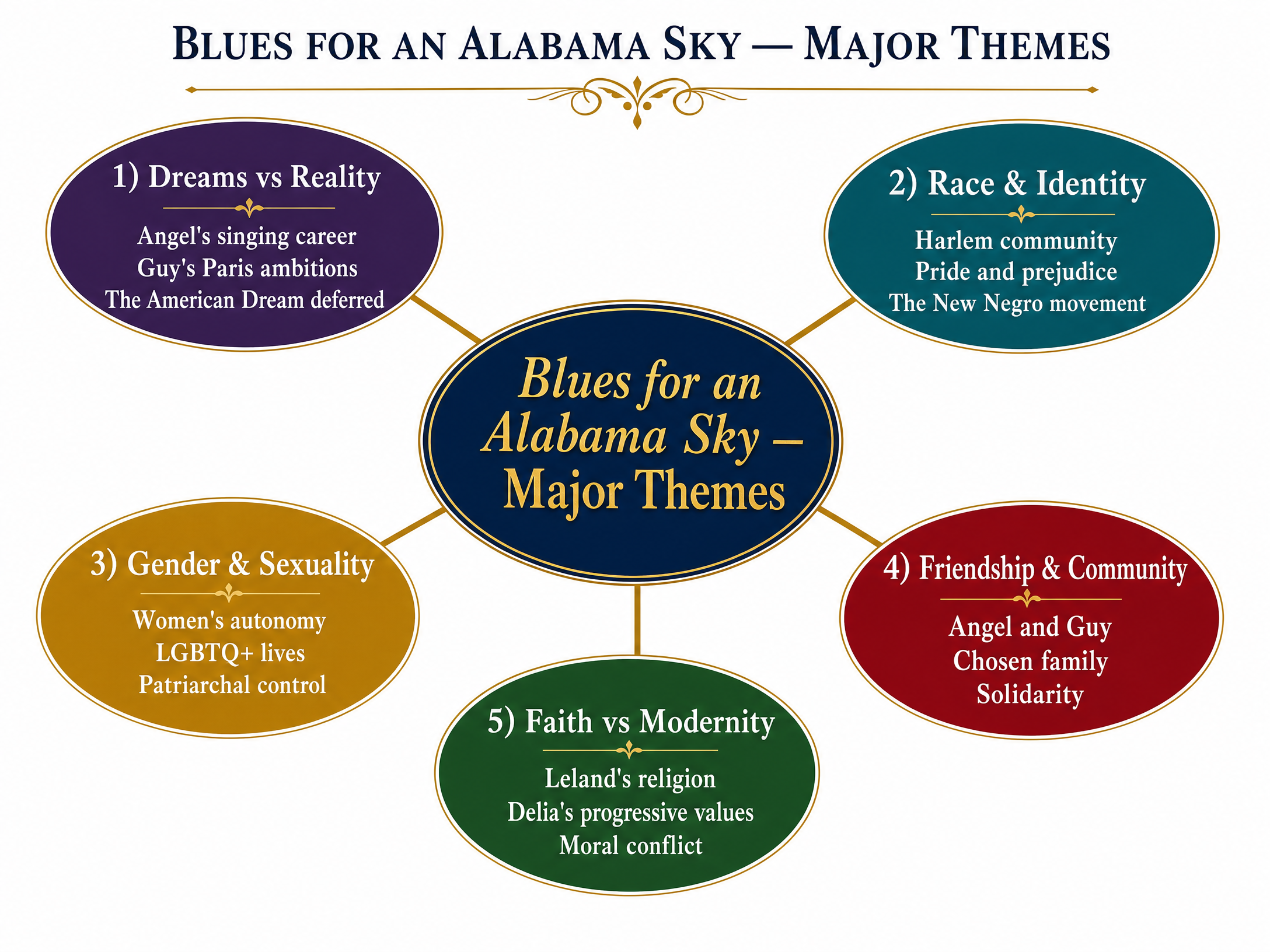
Cleage meticulously contrasts the aspirational energy of the Harlem Renaissance with the crushing economic reality of the 1930s. Every character harbours a dream, but Cleage uses the setting to demonstrate how systemic inequality and economic collapse thwart these ambitions. The title itself—evoking the blues—signals a narrative of suffering and endurance.
Key Quotes:
- "I'm not going to be poor anymore. I've been poor and it breaks your heart." (Angel, Act 1) - Cleage uses stark, monosyllabic language to underscore the brutal reality of poverty that drives Angel's tragic choices.
- "Josephine Baker is my ticket out of this madness." (Guy, Act 1) - Guy's dream of Paris symbolises escape from American homophobia and racism; Paris represents a utopia contrasted against the dystopia of Depression-era Harlem.
Theme 2: Gender, Sexuality, and Autonomy
The play is profoundly feminist, exploring the limited choices available to women in the 1930s and the dangers of patriarchal control. Through Delia's work with Planned Parenthood and Angel's reliance on male providers, Cleage examines reproductive rights and female agency. Guy's open homosexuality further challenges heteronormative conventions, making the play a radical text for its setting.
Key Quotes:
- "A woman's body belongs to her." (Delia, Act 2) - Delia's declarative dialogue positions her as the mouthpiece for progressive feminist ideology, directly challenging Leland's archaic views.
- "I'm looking for a wife, not a..." (Leland, Act 2) - Cleage uses Leland's unfinished sentences and loaded pauses to reveal his deeply ingrained Madonna/whore complex and his desire to control female sexuality.
Theme 3: Race and the Harlem Renaissance
While the characters are united by their racial identity, Cleage highlights the diversity of the Black experience. The play explores the legacy of the Great Migration, the vibrant cultural output of Harlem, and the persistent shadow of Southern racism (symbolised by the "Alabama sky").
Key Quotes:
- "We are the New Negroes!" (Sam, Act 1) - This reference to Alain Locke's concept demonstrates the characters' racial pride and intellectual engagement with their era.
Character Analysis
Angel Allen
Role: The tragic protagonist; a symbol of vulnerability and compromised autonomy.
Key Traits: Glamorous, pragmatic, fearful of poverty, dependent.
Character Arc: Moves from despair (losing her job/lover) to seeking false security with Leland, ultimately reclaiming her bodily autonomy but facing tragic consequences.
Essential Quotes:
- "I need somebody to take care of me."
- "I can't go back to nothing."
Guy Jacobs
Role: The moral and emotional centre of the play; Angel's chosen family.
Key Traits: Flamboyant, fiercely loyal, optimistic, unapologetically gay.
Character Arc: Maintains his dream of Paris despite constant setbacks and homophobia, ultimately achieving his goal but losing his community.
Essential Quotes:
- "I am a designer of dreams."
- "We have to make our own family."
Leland Cunningham
Role: The antagonist; the embodiment of conservative, patriarchal, Southern values.
Key Traits: Grieving, rigid, dangerously traditional, possessive.
Character Arc: Moves from a polite, grieving widower to a violent enforcer of patriarchal morality when his worldview is threatened.
Essential Quotes:
- "A man is supposed to provide."
- "That ain't the way God intended."
Writer's Methods
Stage Directions: Cleage uses detailed stage directions to establish the oppressive summer heat, which mirrors the rising dramatic tension. The constant presence of blues music from the street acts as a Greek chorus, underscoring the characters' sorrow and resilience.
Symbolism: Guy's extravagant costumes symbolise hope and the transformative power of art. Leland's Bible represents rigid moral authority and patriarchal control. The apartment itself functions as a sanctuary of 'chosen family' that is ultimately violated.
Juxtaposition: Cleage masterfully juxtaposes Delia's progressive, educated idealism with Leland's fundamentalist conservatism to dramatise the ideological battles of the era.
Context
Examiners expect candidates to integrate contextual knowledge seamlessly. You must understand:
- The Harlem Renaissance: The 1920s cultural explosion of Black art and literature, and its subsequent decline.
- The Great Depression: The severe economic hardship following the 1929 Wall Street Crash, which disproportionately affected Black Americans.
- Margaret Sanger and Planned Parenthood: The early, highly controversial birth control movement, which Delia represents.
- The Great Migration: The movement of African Americans from the rural South (like Leland) to the urban North, creating cultural friction.
Listen to our comprehensive podcast episode for a deep dive into how to use this context in your exam:

Visual Resources
3 diagrams and illustrations
Interactive Diagrams
1 interactive diagram to visualise key concepts
Conceptual Flow Outline
Angel's Tragic Character Arc
Worked Examples
2 worked examples — open one to explore the question and available guidance.
Practice Questions
Test your understanding — click to reveal model answers
How does Cleage present the relationship between Guy and Angel in the play?
Hint: Consider how their relationship functions as a 'chosen family' and how it contrasts with the traditional relationships represented by Leland.
Explore the significance of the setting (Harlem in the summer of 1930) in Blues for an Alabama Sky.
Hint: Think about the transition from the roaring 20s to the Great Depression, and the oppressive heat mentioned in the stage directions.
How does Cleage use the character of Delia to explore ideas about women's rights?
Hint: Focus on her work with Planned Parenthood and contrast her independence with Angel's dependence.
To what extent is Leland presented as a villain in the play?
Hint: A strong answer will acknowledge his grief and background before condemning his patriarchal violence.